1717 Gravesend Neck Road,




Mercedes Valve Body Repair — Brooklyn 7G/9G-TRONIC Specialist
Factory-Level Care Outside the Dealership
Mercedes Valve Body Repair — Brooklyn 7G/9G-TRONIC Specialist
Factory-Level Care Outside the Dealership
The valve body is the hydraulic control center of a Mercedes automatic transmission, directing fluid pressure to the clutch packs and bands that execute every gear change. When valves stick, solenoid bores wear, or pressure regulators drift, the symptoms run from mildly annoying — a slightly harsh 1-2 — to actively dangerous — a transmission shudder under acceleration on the BQE. Bay Diagnostic on Gravesend Neck Road repairs and replaces valve bodies in the Mercedes 7G-TRONIC (722.9) and 9G-TRONIC families, using factory-level diagnostic equipment and 27 years of dedicated Mercedes experience to guide the diagnosis.
Valve body issues are easily confused with conductor plate issues — both produce similar codes and similar drivability complaints, and the wrong shop will replace one when the actual fault is the other. Mercedes diagnostic software with live transmission data and, where needed, a physical valve-body inspection for sticking valves and worn solenoids is what tells us which repair to perform. We don’t replace a valve body on a transmission that needs a conductor plate. We don’t replace a conductor plate on a transmission that needs a valve body. Diagnostic-first.
Symptoms of Mercedes Valve Body Problems
Owners with valve-body issues typically experience:
- Harsh or jerky gear changes — particularly 1-2 and 2-3 upshifts
- Delayed engagement from Park or Neutral into Drive or Reverse
- Transmission shudder during acceleration — felt through the drivetrain
- Slipping sensation — RPM rising without proportional acceleration
- Fault codes referencing solenoids, pressure regulators or ratio errors
- Transmission stuck in one gear — limp mode
Valve Body Service Procedure
Replacement involves removing the transmission oil pan, removing the valve body assembly, inspecting solenoids, pressure regulators, and valve bores for wear, installing the replacement unit, replacing the transmission filter and ATF with the correct specification, and performing the factory-level transmission adaptation routine to teach the new valve body to the gearbox.
On 722.9 transmissions, valve body service is often performed alongside conductor plate work when both are showing wear — the transmission pan-off access is shared, and combining the two repairs in a single visit is significantly cheaper than separate visits.
7G-TRONIC and 9G-TRONIC Coverage
We handle valve body work on both major Mercedes automatic transmission families currently on NYC roads: the 7G-TRONIC (722.9), found in most 2004–2014 Mercedes models, and the 9G-TRONIC (725.0), in current-production vehicles. Both transmissions have known valve body wear patterns, both require Mercedes factory-level diagnostic software for proper post-replacement adaptation, and both are within the shop’s scope.
What Your Visit Looks Like
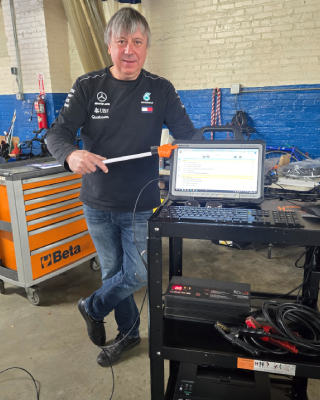
Diagnostic intake is typically a same-day appointment. Valve body replacement plus filter, fluid and adaptation is generally a one-day job. Dennis explains the diagnosis directly — what the live data showed, what the physical inspection confirmed, and what the all-in cost is — before any work begins.
Valve Body Service for
Brooklyn and NYC
Bay Diagnostic is at 1717 Gravesend Neck Road in Brooklyn, an easy drive for Mercedes owners in Ditmas Park, Prospect Lefferts Gardens, and Wingate via Caton Avenue, Ocean Avenue, and Linden Boulevard. Manhattan, Queens, the Bronx and Staten Island drivers reach the shop via the BQE and the Belt Parkway. Transmission complaints don’t self-resolve — schedule a diagnosis at the first symptom.